Now accepting new patients - call 212-328-1180
Tongue tie care

Tongue-Tie Treatment with Craniosacral Therapy

Gentle support for infants, toddlers, and breastfeeding parents dealing with tongue-tie restrictions.

Hands-on, gentle care in Midtown Manhattan

Craniosacral therapy, myofascial release, and supportive techniques tailored to your family.

Latch
Feeding support
Ease latch challenges and improve comfort.
Milk
Lactation flow
Support supply and demand rhythms.
Calm
Nervous system
Gentle care to help the body settle.
Grow
Developmental support
Encourage early milestones with care.
Overview

Whole-body support for tongue-tie

Tongue-tie occurs when the frenulum is too short or tight, limiting tongue movement and affecting feeding.

  • Shallow latch can lead to nipple pain and low milk transfer.
  • Restricted tongue motion can affect jaw, neck, and cranial tissues.
  • Gentle craniosacral therapy helps ease tension patterns.
  • Care is tailored to baby and parent needs.
Lactation

How tongue-tie can impact milk production

Milk production depends on supply and demand, and a restricted latch can disrupt that cycle.

  • Poor latch may reduce prolactin signaling for milk production.
  • Shorter feeds can lower oxytocin release.
  • Baby fatigue can limit effective nursing sessions.
  • CST helps calm the system and support feeding comfort.
Parent health

Support for breastfeeding parents

  • Nipple pain and tissue irritation from shallow latch.
  • Fatigue and stress from long, difficult feeds.
  • Emotional strain and anxiety around feeding.
  • Gentle care can help the nervous system settle.

Every case is different; care is coordinated with your care team.

CST approach

Craniosacral therapy explained

Craniosacral therapy is a light-touch technique focused on the cranium, sacrum, and surrounding fascia.

  • Supports healthy craniosacral rhythm and fluid flow.
  • Releases restrictions in fascia and soft tissues.
  • Helps the nervous system return to balance.
Care
In-office support
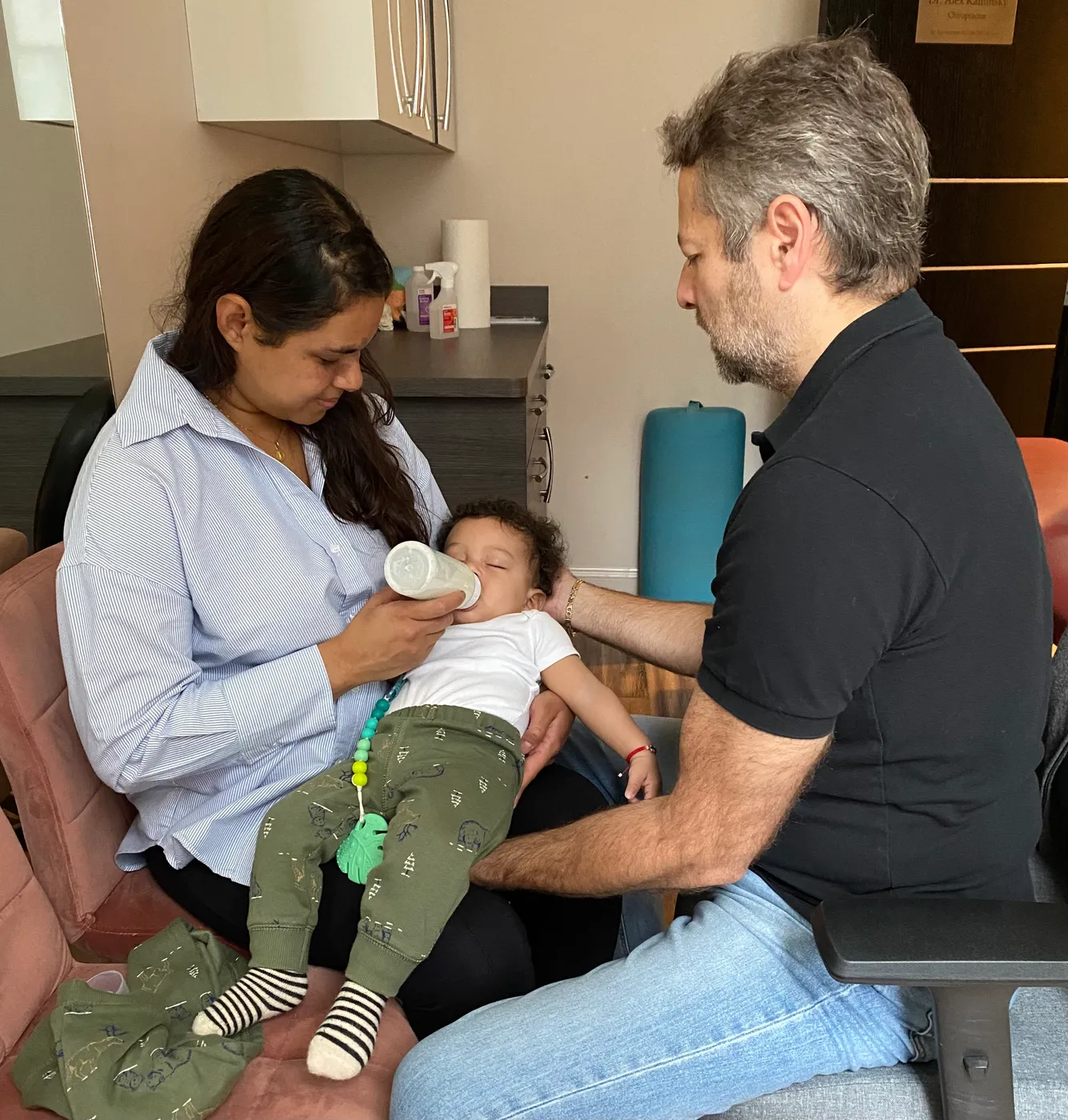
Sessions are gentle and designed to keep babies and parents comfortable throughout care.
Newborns and toddlers

Support for babies with tongue-tie

Tongue-tie can affect feeding, swallowing, and early speech patterns as children grow.

  • Addresses tension that limits tongue mobility.
  • Supports jaw, neck, and cranial alignment.
  • Encourages calmer feeding and digestion.

Gentle manual care helps release restrictions so babies can feed and settle more easily.

Pediatric craniosacral therapy

Care plan

What to expect in care

Sessions focus on assessment, gentle release, and practical guidance for feeding comfort.

  • Assessment of latch, jaw tension, and tongue mobility.
  • Gentle release work around cranial and oral tissues.
  • Guidance for soothing, positioning, and home support.
  • Coordination with lactation consultants or dental providers.
Outcomes

Goals you can work toward

  • Improved latch and longer feeds.
  • Less nipple pain and feeding fatigue.
  • Calmer baby and better sleep.
  • Improved oral mobility as kids grow.

Results vary based on each child's needs and care plan.

Details

Full overview

Read the detailed narrative below for the full description of tongue-tie care.

Visit
Office details
Craniosacral Therapy NY
36 East 36th Street
New York, NY 10016
Call/Text: 212-328-1180
Email: craniosacraltherapyny@gmail.com
In depth

Full narrative

Tongue-tie Can Reduce Lactation & Milk Production Tongue-tie Can Affect the Health of Breastfeeding Mothers Craniosacral Therapy Explained for Breastfeeding Lactating Moms Treating Hormonal Imbalance for Improved Milk Production in Nursing Mothers Treating Pain & Fatigue in Breastfeeding Moms Treating Stress & Anxiety in Breastfeeding Moms Treating Newborns and Toddlers Tongue-tie with Craniosacral Therapy

A multifaceted holistic response to a multifaceted problem

  • shallow latching where the baby is not getting enough breast tissue in their mouth and often causing friction and leading to sore, cracked nipples for mom.
  • inability to sufficiently suckle and extract a healthy amount of milk - leading to frustration for both baby and mom and baby and possibly disruptive to mom’s ability to produce milk. 

How Tongue-tie Can Reduce Moms’ Lactation & Milk Production

Many moms are surprised to learn their baby’s tongue-tie can reduce their lactation & milk production but this does indeed happen through some interlinked biological mechanisms within the body.  Milk production relies on a supply and demand system where the more a baby nurses removing milk, the more a woman’s body produces milk.  This biological system is controlled by two key hormones;

prolactin

that signals milk production and;

oxytocin

that triggers milk’s release during feeding.

When a baby suckles, the prolactin levels in the blood surge and stimulate production of milk.

However a baby with tongue-tie not latching well and creating a demand can falsely trigger the body into thinking that less milk is needed, leading to a decrease in levels of prolactin and minimal signaling for the production of milk.  Ultimately there is a lesser supply of milk supply, leading to shorter nursing sessions, reduced oxytocin levels, and left unaddressed a diminishing supply and demand cycle settles in place.   Craniosacral therapy is a holistic intervention capable of reversing this cycle and supporting a woman’s lactation and milk production.

How Tongue-tie Can Affect the Health of Breastfeeding Mothers  

Research titled, “ Mothers' Experiences of Breastfeeding a Child with Tongue‐tie” has shown mothers breastfeeding a baby with tongue‐tie can have their personal wellness significantly impacted, negatively affecting both physical and emotional health including experiencing excruciating physical pain, fatigue and discomfort during the breastfeeding years.

The discomfort and stress of breastfeeding with a tongue-tie can also hinder the release of the key hormone involved in triggering milk’s release during feeding, oxytocin. In addition to being essential in releasing milk,researchtitled, “Oxytocin and early parent-infant interaction” has shown oxytocin promotes feelings of love and bonding between mom and baby and reduced levels can make breastfeeding less satisfying for mom, creating a negative feedback loop.

Thus it’s important to understand the connection between tongue-tie, breastfeeding and moms’ health  is a multifaceted interlinked biological mechanism within the body to which craniosacral therapy is uniquely suited to improve health of both breastfeeding moms and their babies by treating:

  1. Hormonal Imbalances 
  2. Physical Pain & Fatigue
  3. Stress & Anxiety
  4. Baby’s Tongue-tie

Craniosacral Therapy Explained for Breastfeeding Lactating Moms

Craniosacral therapy is a gentle hands-on massage technique that uses light touch,  about the same amount of pressure applied to check the ripeness of a tomato,

performed on the cranium (skull) and sacrum (t

riangular bone in the lower back)

to examine membranes and movement of the fluid of the cranial system (the structures and fluid that surround and protect the brain and spinal cord).

Craniosacral therapy is effective in resolving any cerebrospinal fluid flow blockages, tension and other restrictions in the craniosacral system and thereby calming the central nervous system, setting it to equilibrium or balance.   Balance or ‘homeostasis’ is crucial for the central nervous system to drive the body’s healthy functioning,  physiological stability and assuring the correct response is activated when necessary - such as rest and relaxation.

The term craniosacral therapy refers to how this treatment addresses abnormalities of craniosacral system and that includes cerebrospinal  fluid, fascia and membranes running along the spine connecting to both the skull / cranium and sacrum.  Cerebrospinal fluid is the fluid that surrounds, cushions and nourishes the brain and spinal cord.

Fascia is a thin sheath casing of connective tissue surrounding every structure in the body including bones, tendons, joints, nerves, ligaments, organs, muscles, cells and more.

Fascia restrictions within the craniosacral system lead to abnormal motion of the cerebrospinal fluid and disruption to cerebrospinal fluid flow, increasing pressure placed on spinal nerves resulting in tightness in connective tissues - and experienced with feeling a stiff neck, chronic pain, or for example in the case of a baby, a ‘tight tongue’ with limited movement.

1. Treating Hormonal Imbalance for Improved Milk Production in Nursing Mothers

The craniosacral system is surrounded by 3 layers of membranes encasing cerebrospinal fluid that protects the skull (brain) and spinal cord.

The underlying foundation of craniosacral therapy is that not only can manual palpation of the craniosacral system detect the health of the central nervous system,  gentle manual therapeutic touch can be applied to resolve any restrictions and revitalize the functioning of the central nervous system and all that extends from it.

Because the craniosacral system is literally the brain and spinal cord, it influences the endocrine system and affects the brain’s important hormone producing in pituitary and pineal glands.  Prolactin, the milk production signaling hormone, is synthesized by the pituitary gland.

The thin sheath casing fascia of the outermost layer of membrane surrounding the cranial system also surrounds the stalk of the pituitary gland.  Any fascia restriction or strain at the stalk of the pituitary gland can disrupt critical hormonal messaging from the brain to the gland, affecting the function and efficiency of breast milk production.  The very focus of craniosacral therapy is to release tension in the fascia and improve the functioning of all glands and organs in the body.  Precisely targeted manual palpation applied to the outermost membrane layer of the cranial system can improve the production, circulation, and reabsorption of cerebrospinal fluid, revitalizing the fascia surrounding the pituitary gland and assuring it’s optimal functioning.  It’s also worth noting that research has indicated lymphatic massage, including cranial sacral massage, delivers a robust flood of the pleasant hormone that promotes a feeling of love and bonding between mom and baby, oxytocin.

2. Treating Pain & Fatigue in Breastfeeding Moms

Further research has shown that Mothers who are breastfeeding commonly endure excruciating physical pain, fatigue and discomfort during the breastfeeding years.

Craniosacral works to relax the musculoskeletal system and unwind patterns of tension.  It’s important to understand tension (pain) surfaces at the point of the weak link, which is not always the actual location of its root.   Symptoms and their location do not reliably or accurately indicate the actual origin of pain, and focusing on symptoms yields only temporary relief.

However craniosacral therapy can detect the true origin of pain and correct any fascia restrictions thereby allowing the body to self-correct and function more optimally.

In sum, craniosacral therapy directly treats the internal tension patterns thereby returning back to the body its ability to self-manage and ultimately resolve pain at its root.

Also the reality is breastfeeding moms can face a type of pain and fatigue that’s multifaceted due to enormous metabolic demands (milk production); sleep interruptions feeding newborns; constantly physically carrying a baby; hormonally fluctuations; mental strain of concern over a baby's needs around the clock; and pressure to do everything "right".  It’s a lot, understandably overwhelming and all combines taking its toll in heavy emotional and mental exhaustion.

At the end of the day support and treatment for the range of issues breastfeeding moms commonly face stems back to the need for a healthy central nervous system serving as the chief and underlying coping mechanism.  For this reason craniosacral is uniquely distinguished as the best fitting therapeutic response

in treating the range and scale of pain and fatigue in breastfeeding moms endure.

Craniosacral therapy is a truly holistic treatment and its approach is that it is the person’s body that knows exactly what to do if you can first reduce tension,  inflammation and promote deep relaxation.

Click here to review our page on craniosacral therapy treating Chronic Fatigue Syndrome and here to read our page on craniosacral therapy treating Chronic Neck & Back Pain.  Our myofascial trigger point therapy is also effective in treating pain and fatigue in breastfeeding moms.

3. Treating Stress & Anxiety in Breastfeeding Moms

Research has indicated mothers breastfeeding a baby with tongue‐tie have had their personal wellness stressed, sometimes to the breaking point, with their central nervous system entrenched in a cycle of pain and stress.

It's natural for moms who’ve recently birthed to worry about their baby's wellbeing and whether they're doing a good job, however the anxiety produced can be draining.

When this happens the central nervous system is ‘stuck’ in stress response mode.  Craniosacral therapy works to calm the central nervous system by innervating the parasympathetic nervous system manually to counterbalance the stress,  relax and return the central nervous system to homeostasis. Which also results in more adequate milk production

Click here to review our page on craniosacral therapy treating anxiety and stress through the vagus nerve toning.

Since it acts as the body's command center regulating nearly everything, balance or homeostasis of the central nervous system is crucial for mental and emotional wellness.  Homeostasis assures proper levels of neurotransmitters and  robust communication between brain cells regulating sleep, rest, mood, memory, learning and stress response. When homeostasis is disrupted the stress response can go into overdrive leading to anxiety, depression, sleep problems, inability to concentrate and other health ailments. Craniosacral therapy centers on guiding the body to homeostasis thereby leading to better emotional regulation, cognitive function, and overall well-being.

4. Treating Newborns and Toddlers Tongue-tie with Craniosacral Therapy

The term “tongue tie” belies the range of issues warranting treatment as tension and restrictions originating from tongue-tie can be present elsewhere in the body since:

  • Babies with tongue-tie tend to be a fussier baby toward food eating slowly,  commonly spitting out food, choking while swallowing solid food, and are selective of food  textured foods (hard or soft, crunchy or mushy or smooth or lumpy).
  • Toddlers may have difficulty in speaking, finding it hard to articulate sounds or entirely unable to move their tongue downwards, upwards,  and side to side. The lift of the tongue and wave-like movement creates a vacuum inside the mouth that draws out milk. Craniosacral therapy can revitalize the proper functioning of these movements essential for the baby to draw the milk from mom’s breast.
  • Tongue-tie babies may also not be experiencing the key part of breastfeeding, the relaxation triggered when the baby’s tongue touches their hard palate (the upper hard palate in the mouth) where nerves trigger a calming response.

Craniosacral therapy can help address the underlying tension that is keeping your baby from breastfeeding well, any digestive and musculoskeletal (tongue movement) issues.  Treatment focuses on relaxation and many babies falling asleep or simply smiling during their session.  Pediatric craniosacral therapy is a kind of gentle manual medical massage of the structures and bones that run adjacent to the central nervous system - and can release compression and tension among the cranial bones of the head, spine and the sacrum bone.

As noted earlier, the series of 3 membranes that surround the spinal cord connect to the bones of the head. This membrane system i

s filled with cerebrospinal fluid, coating, protecting and nourishing the brain and spinal cord,

and also holding and transferring tension throughout your body.  The circulation of cerebrospinal fluid within this system creates a pulse-like rhythm.

Pediatric craniosacral therapy assesses the health and efficiency of that rhythm and through gentle manual techniques can increase the flow and circulation of cerebrospinal fluid by eliminating blockages and invigorating nerves.

Increased cerebrospinal fluid circulation can help normalize a baby's central nervous system, returning it to equilibrium and allowing  homeostasis to enable the body to heal itself, including tongue-tie related issues.

I work with the natural movements of the baby’s bones to release the restrictions held within this membrane system, returning the central nervous system to a state of homeostasis so it can drive all body systems to function efficiently.

Click here for a comprehensive overview of pediatric craniosacral therapy.

Craniosacral Therapy NY text banner

Schedule a visit

Have questions about this page?

Call the office or send a message. The practice will follow up to discuss your questions, availability, and next steps.