
Craniosacral Therapy for Infant Reflux in New York City
Reflux, also known as gastro-esophageal reflux disease (GERD), is a condition in which the stomach's contents come back up the esophagus. For a fussy, uncomfortable baby, gentle Craniosacral Therapy in Midtown Manhattan offers a calm, non-invasive way to support digestive comfort alongside your pediatrician's care.
Dr. Alex Kaminsky, D.C. · Certified Craniosacral Therapist · over 25 years
Gentle, hands-on care for infants and children — never cracking, never forceful — offered as a complement to medical treatment, not a replacement for it.
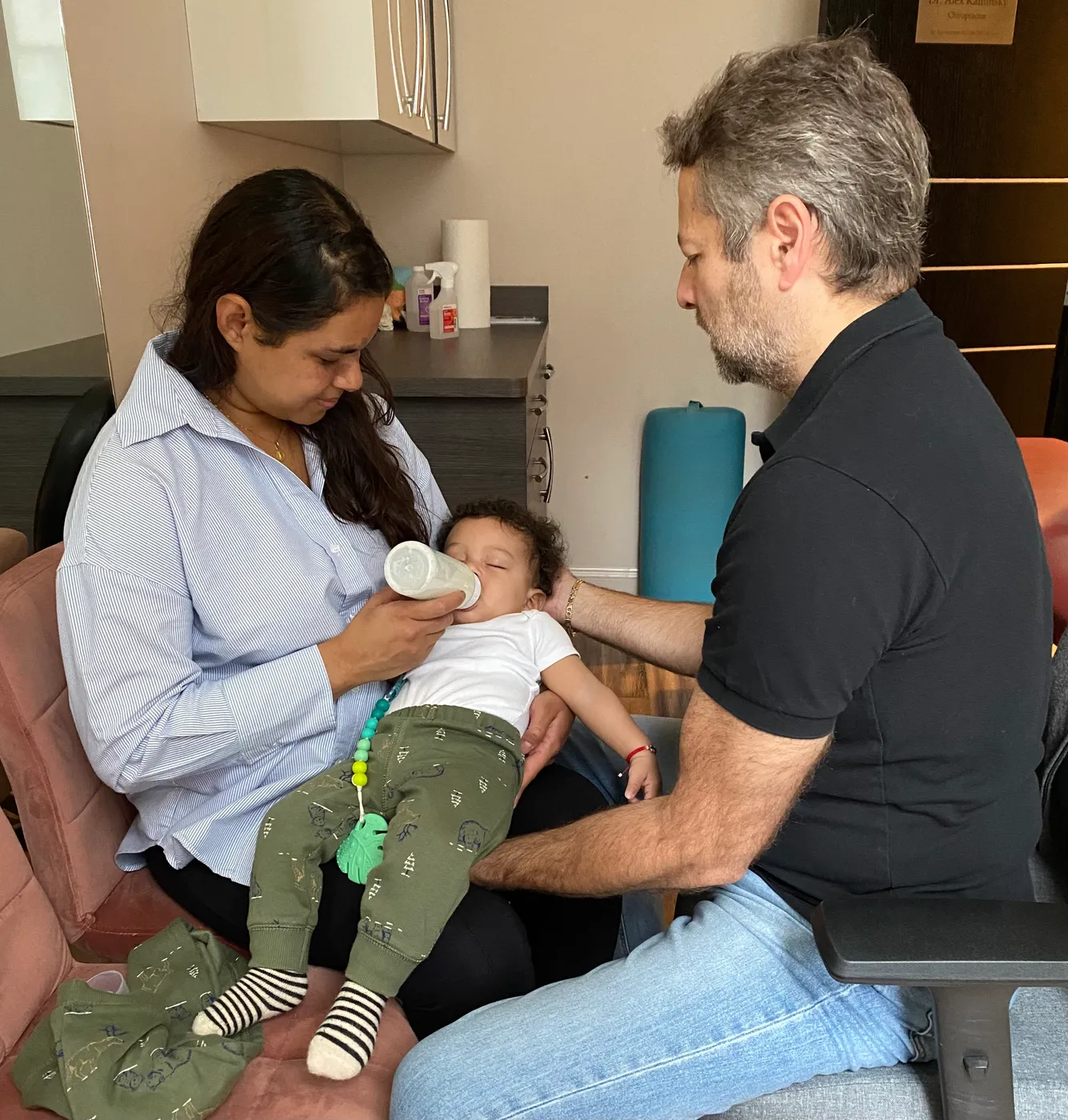
What infant reflux is — and why it deserves attention
Reflux is a chronic condition in which the stomach's contents — primarily acid — come up the esophagus and produce burning and pain. In babies, it is often termed "normal." Many infants are placed on medications and families are told to wait until the child grows out of it. That approach can leave a baby fussy and subject to painful symptoms, and it commonly results in difficulty eating. While reflux is quite common among infants, it is by no means normal.
Understanding the basics of reflux helps explain how a gentle, complementary therapy can fit into your child's care. Bringing Craniosacral Therapy into the picture can be the much-needed break-through some families are looking for in their child's gastrointestinal comfort — always as a complement to, not a substitute for, medical care.
Common signs of reflux in infants
- Vomiting associated with eating — spitting up or vomiting around feeds.
- Obvious pain during or after eating — discomfort that disrupts feeding.
- Arching the back — a telltale posture as the baby reacts to discomfort.
Some infants have "silent reflux," which does not exhibit the usual vomiting or spitting up seen in most reflux cases. Silent reflux can be easy to miss, but it is just as serious and just as painful for the baby.
What may contribute to reflux
Reflux has long been attributed to a weak sphincter connecting the stomach and esophagus. While that may be the case in some circumstances, more research is showing how the nervous system and subluxations of the spine may contribute to this painful condition in children. Having your child with reflux examined by a Craniosacral Therapist to determine the cause and possible correction could be a beneficial step in the process of healing — one that works alongside your pediatrician.
See a physician for warning signs. Reflux can overlap with conditions that need medical evaluation. Contact your pediatrician promptly if your baby has poor or no weight gain, forceful or projectile vomiting, blood in the vomit or stool, difficulty breathing, persistent refusal to feed, or any sign of dehydration. Craniosacral Therapy does not diagnose or treat these problems and never replaces medical care.
How Craniosacral Therapy supports babies with reflux
A growing body of evidence is beginning to support the use of alternative modalities as effective means for addressing reflux in infants. Craniosacral Therapy — gentle touch and baby massage — is becoming a popular way both to relax the infant suffering from reflux and to bring relief to the symptoms. It is a quiet, non-invasive form of care that many families find comfortable for even the youngest babies.
Craniosacral Therapy works in babies by helping to relieve stresses and strains in the tissues that can result from pregnancy, labor, and birth. Very gentle techniques are used to assist in the release and unwinding of the tissues around the baby's head, neck, upper back, and sacrum (the base of the spine). There is no cracking and no forceful manipulation — only light, careful contact.
The idea of "nerve interference"
Within Craniosacral Therapy, altered nerve function from altered spinal alignment is referred to as "nerve interference." Nerve interference can reduce the amount of vital nerve energy reaching the organs, including the stomach. The reasoning is that, left unaddressed, the stomach and digestive tract may move into a state of dysfunction that affects digestion.
Many GERD sufferers under the care of Craniosacral Therapy have reported significant reduction in their symptoms. The thinking behind this is that realigning and returning the spine toward full health — along with strengthening muscles and other soft tissues — reduces the mechanical pressure on the internal organs. This is intended to allow nerve energy to flow more freely throughout the body, supporting more normal function of the stomach and other vital organs.
What a gentle session involves
- A calm, unhurried evaluation of areas of restriction in the head, neck, upper back, and sacrum.
- Very light, hands-on contact to assist the natural release and unwinding of strained tissues.
- A soothing, non-invasive experience designed to help relax the baby.
- Care offered as a complement to — and in communication with — your pediatrician's plan.
Craniosacral Therapy is a gentle, complementary therapy. It does not cure reflux or GERD, does not replace medical diagnosis or treatment, and outcomes vary from child to child. Please keep your pediatrician informed and continue any care they recommend.
Infant reflux and Craniosacral Therapy: FAQ
What does infant reflux look like?
In infants, reflux often shows up as vomiting associated with eating, obvious pain during or after eating, and arching the back. Some babies have "silent reflux" that does not include the usual vomiting or spitting up, but it can be just as serious and painful.
Is reflux normal in babies?
Reflux is very common among infants, but common is not the same as normal. It is often labeled normal and managed with medication while families are told to wait for the baby to grow out of it. Craniosacral Therapy offers a gentle, complementary way to support a fussy, uncomfortable baby.
How does Craniosacral Therapy help with reflux?
Craniosacral Therapy uses very gentle techniques to help release stresses and strains in the tissues that can result from pregnancy, labor, and birth. The therapist assists the release and unwinding of tissues around the baby's head, neck, upper back, and sacrum, which may help relax the infant and bring relief to symptoms.
Is Craniosacral Therapy safe and gentle for infants?
Yes. Craniosacral Therapy is a gentle, non-invasive, hands-on approach with no cracking or forceful manipulation. It is offered as a complement to your child's medical care, not a replacement for it. Always have a baby with reflux evaluated by your pediatrician.
When should I see a doctor instead?
Reflux can overlap with conditions that need medical attention. See your pediatrician promptly for warning signs such as poor weight gain, forceful or projectile vomiting, blood in vomit or stool, difficulty breathing, refusing to feed, or signs of dehydration. Craniosacral Therapy does not diagnose or treat these problems.
Talk with the office about your baby's reflux
Call or send a request and the practice will follow up about your questions, availability, and next steps. Gentle, complementary care for infants and children with Dr. Alex Kaminsky, D.C., in Midtown Manhattan.