Torticollis
Gentle support for the cranial, spinal, and muscular components of a tight, turned neck in infants.
About torticollis care +

Gentle, non-invasive, hands-on support for babies and children — tailored to each child's age, symptoms, and developmental milestones in New York City.
Dr. Alex Kaminsky, D.C. · Certified Craniosacral Therapist · over 25 years of care
Craniosacral therapy and supportive, non-invasive techniques chosen for your child's needs — with no cracking and no forceful manipulation. CST complements, and never replaces, the care of your pediatrician.
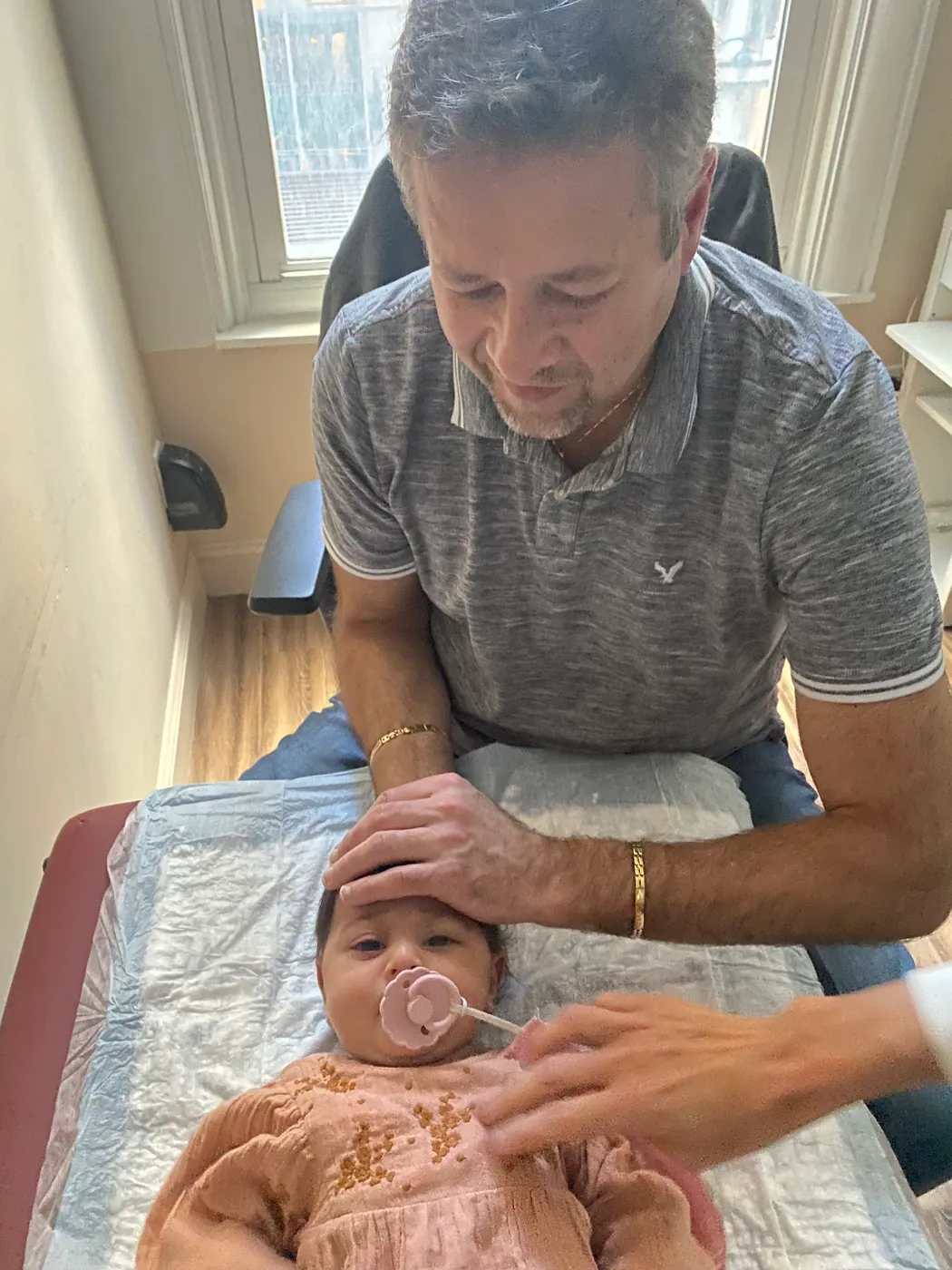
At Dr. Kaminsky's practice in New York City, pediatric craniosacral therapy is a safe, gentle, and non-invasive way of supporting the nervous system that runs between the spine, the head, and the rest of the body. There is no cracking and no forceful manipulation — only light, attentive, hands-on contact. Dr. Kaminsky loves children and welcomes all newborn babies, infants, children of every age, adolescents, and young adults, with each visit shaped around that child's individual health and developmental needs.
Understanding a child's symptoms and conditions starts with a full physical examination. That includes a visual evaluation and palpation, along with a careful check of the head and spine — looking at alignment, muscle tone, and full range of motion of the neck, back, and limbs — and an examination of the oral cavity for tongue-tie and lip-tie. A craniosacral system evaluation should not be overlooked: a malfunction may not be obvious at first, yet it may be quietly interfering with how a child develops.
From there, care is tailored to your child's age, symptoms, and developmental milestones. The goal is always comfort, trust, and gentle support — never a rushed or forceful experience. Pediatric craniosacral therapy works alongside the guidance of your pediatrician and other providers as a complementary approach.
Parents come in with a wide range of questions. Pediatric craniosacral and chiropractic care can offer gentle, supportive help for concerns such as:
If your child is not performing at age-appropriate milestones, have them seen.
Please see your physician for diagnosis and warning signs. Craniosacral therapy is a gentle, complementary approach — it does not diagnose, cure, or replace medical care, and results vary from child to child. For red-flag concerns such as high or persistent fever, trouble breathing, an ear that is severely painful or draining, dehydration, a head injury, or any worsening or unusual symptom, contact your pediatrician or seek emergency care first.
Healthy child development brings together several factors: nutrition, physical activity, and an optimally functioning nervous system. As a child's spine develops, it can be vulnerable to trauma from the events and activities of everyday life. The "arc of health" of a child begins with birth and is shaped by the events of childhood, nutritional shortcomings, emotional coping, and the many other stresses placed on the body and emotional system.
The objective of pediatric care is to minimize these negative forces while strengthening the body's ability to adapt to its environment. It is important to note that symptoms — pain and malfunction — may not surface for years. An injury to the nervous system that is left unaddressed can have long-lasting effects, while early, gentle intervention may help prevent negative adaptations and compensating habits that lead to a need for care later in life.

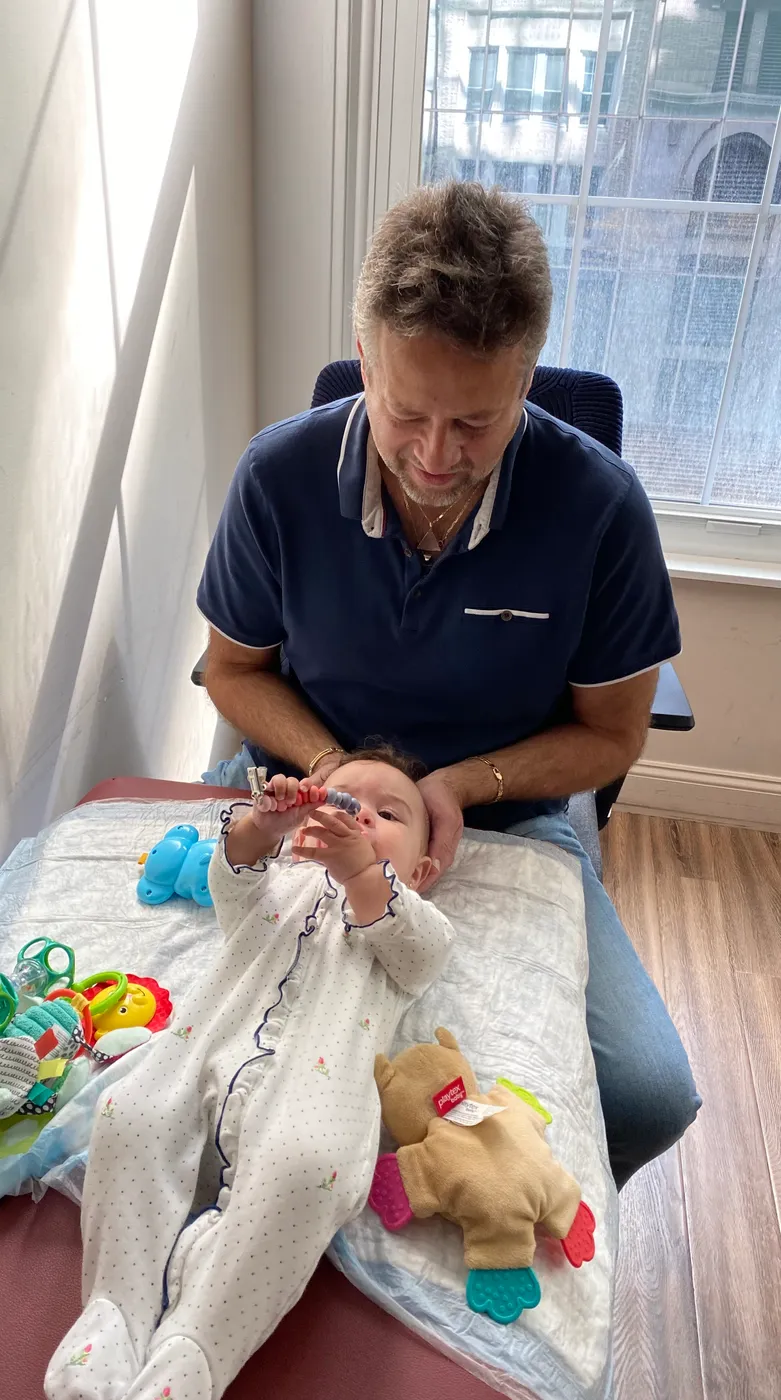
Dr. Kaminsky also sees newborns and babies. The touch is very light, and your baby can often stay in your arms. Read more about infant craniosacral therapy, including help with feeding trouble, colic, reflux, and a head turning preference.
"The inner wisdom of a fetus and an infant is every bit as intelligent as that of an adult. It knows what its body needs to correct its dysfunctions. It knows why those dysfunctions are present. It has a softer voice than the adult inner wisdom. Therefore, the craniosacral therapist must learn to listen more carefully. Once the connection is made, all the information you need for care will be forthcoming."
Dr. Kaminsky has great experience treating children — including his own, since they were born — and has worked with hundreds of children over the years. Treating young patients asks more of each session. It calls for keen observation, sharp palpation skills, and a great degree of self-trust. Above all, the child must feel safe with the practitioner, and Dr. Kaminsky connects well with children of all ages.
Establishing a warm, safe environment is essential to helping children feel comfortable. With his compassionate, patient approach, Dr. Kaminsky uses non-invasive techniques focused on the nervous system and soft tissues, adjusting the pace and contact to each child's comfort and needs.
Craniosacral therapy is a gentle, non-invasive, hands-on approach. There is no cracking or forceful manipulation. Care is tailored to each child's age, symptoms, and developmental stage, and it is intended to complement, not replace, the care of your pediatrician.
Dr. Kaminsky welcomes newborns, infants, children of all ages, adolescents, and young adults. A child's craniosacral rhythm can be assessed after birth because of the straining effects of the birthing process.
Understanding a child's symptoms and conditions involves a full physical examination: a visual evaluation, palpation, and checking of the head and spine, including alignment, muscle tone, and full range of motion of the neck, back, and limbs, along with the oral cavity for tongue-tie and lip-tie.
Families come in for concerns such as torticollis, flat head syndrome, consistent crying, tongue or lip tie, infantile colic, reflux, ADD/ADHD, allergies, sinus issues, asthma, bed wetting, digestive issues, headaches, chronic ear infections, scoliosis detection, sensory processing concerns, and TMJ. Always see your physician for diagnosis and for any warning signs.
Call or text the Midtown Manhattan office at 212-328-1180, or send a request through the contact page. The practice will follow up to discuss your goals, concerns, and availability.
Call or text the office, or send a request, and the practice will follow up to discuss your child's goals, concerns, and availability. Gentle, non-invasive pediatric care in Midtown Manhattan.