
Infant Craniosacral Therapy in New York City
Your baby is here, and something feels off. Maybe feeds are a struggle. Maybe your baby arches, cries for hours, or only turns one way. Infant craniosacral therapy is a very gentle, hands-on way to ease the tension a newborn's body can hold after months in the womb and the work of being born.
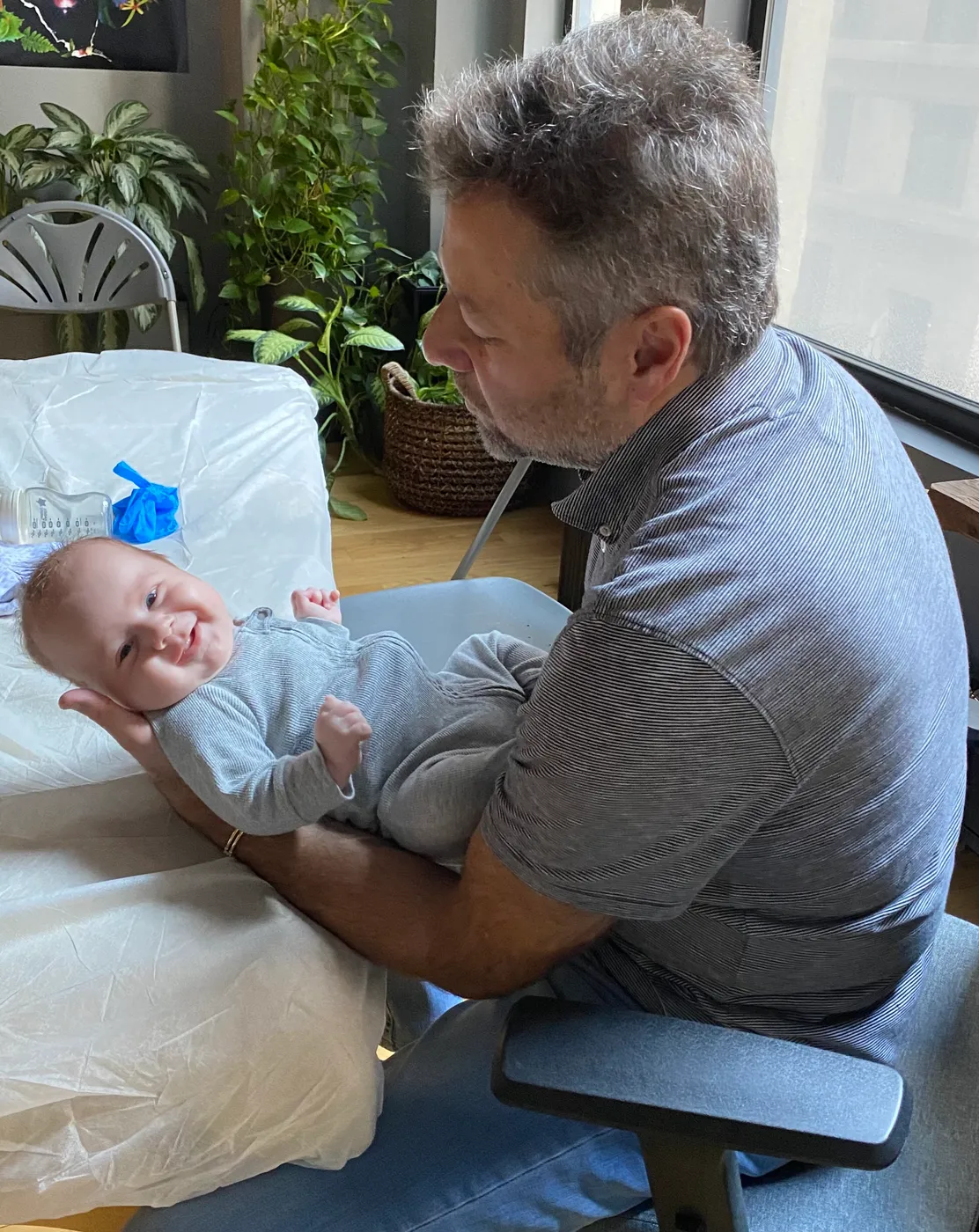
Dr. Alex Kaminsky, D.C., sees newborns and babies at 36 East 36th Street in Murray Hill. He is a Certified Craniosacral Therapist trained through the Upledger Institute. His touch is about the weight of a nickel, and there is no cracking. You stay with your baby the whole time, and your baby can often stay in your arms.
Why babies can hold tension
A baby's body is soft and adaptable. That's why pregnancy and birth can leave a mark. Weeks spent curled in one position can do it. So can a long labor, a very fast one, or a delivery that needed assistance. Any of these can leave tightness in a baby's muscles, fascia, and craniosacral system.
Parents often notice it before anyone gives it a name. A baby may feel stiff to hold. Feeds may go better on one side. The same tension can sit behind several concerns that have names of their own, like torticollis, flat head shape, colic, reflux, and tongue tie.
Signs parents often notice
- Trouble latching, or feeding that goes better on one side
- Arching backward, especially during feeds
- Crying a lot without a clear cause, or being hard to settle
- Always turning the head to the same side
- A flat spot starting on the back or side of the head
- A stiff body, tightly clenched fists, or arms and legs that resist movement
- Fussing in the car seat, during tummy time, or at diaper changes
- Short naps and trouble falling asleep
What happens at your baby's first visit
Dr. Kaminsky starts by talking with you about your baby's history and what you're noticing. Then he does a gentle exam of the whole baby, not just the tight spot. He looks at:
- Posture and how evenly your baby holds and moves each side
- Muscle tone
- Range of motion in the neck, back, arms, and legs
- The mouth, including a check for tongue tie and lip tie
- The craniosacral rhythm
Then comes the hands-on part. Dr. Kaminsky uses still, very light holds along the head, spine, and body. He feels for areas that are holding instead of moving freely, and gently encourages them to soften. Your baby can be in your arms or on the table right beside you. The visit is paced around your baby's comfort.
You may leave with simple self-care guidance to use at home between visits.
What to bring
Bring what you'd pack for any outing, like diapers and a blanket your baby likes. If you have notes from your pediatrician or lactation consultant, bring those too.
Concerns Dr. Kaminsky sees in babies
Many families come in for a specific concern. Each one has its own page with more detail:
- Tongue tie: babies who struggle to latch or click during feeds
- Colic: long crying spells, legs pulled up, and evenings that are hard to settle
- Reflux: frequent spit-up, arching during feeds, and fussing after eating
- Torticollis: a baby who only turns one way or tilts the head to one side
- Plagiocephaly: a flat spot on the back or side of the head, often seen with torticollis
- Baby body tightness: a baby who feels stiff, arches backward, or resists certain positions
For older children and teens, see pediatric craniosacral therapy. Dr. Kaminsky also offers gentle pediatric chiropractic care, with no cracking at any age, and craniosacral therapy in NYC for adults.
Infant craniosacral therapy and your pediatrician
Infant craniosacral therapy is complementary care. It does not diagnose or treat medical conditions, and results vary from baby to baby. Keep your pediatrician in the loop. Care is coordinated with your pediatrician, lactation consultant, or dental provider.
Call your pediatrician right away if your baby has a fever, poor feeding or weight gain, a bulging soft spot, marked stiffness or floppiness, uneven movement, or any loss of skills they already had.
Choosing a practitioner for your baby
Research on infant craniosacral therapy is still limited, so be wary of anyone who promises results. A good practitioner will explain what they're doing, keep the touch very light, and encourage you to stay in touch with your pediatrician. Ask about their training with babies before you book. Here is Dr. Kaminsky's.
About Dr. Kaminsky
Dr. Kaminsky has been a licensed chiropractor since 2000 and has offered craniosacral therapy since 2015. He is a Certified Craniosacral Therapist (CST-T) through the Upledger Institute International. He is a member of the International Chiropractic Pediatric Association and has taken pediatric seminars as part of his ongoing training. He has treated his own children since they were born.
Visiting the office
The office is at 36 East 36th Street, Suite 201, between Park and Madison Avenues in Murray Hill. It's a short walk from Grand Central. The building entrance is wheelchair accessible.
- Hours: Monday to Thursday, 12 pm to 9 pm, and Friday, 12 pm to 6 pm
- All visits are by appointment
- Insurance is not accepted. You get an itemized superbill you can submit to your plan. HSA and FSA payments are accepted.
Frequently asked questions
Is craniosacral therapy safe for newborns?
It's very gentle. The touch is about the weight of a nickel, with no cracking and no forceful movement. It's complementary care, so keep your pediatrician involved. With any practitioner, it's fair to ask about their pediatric training before you book.
How young can my baby be seen?
Dr. Kaminsky welcomes newborns, as well as older babies, children, and teens.
Will I be with my baby the whole time?
Yes. You stay in the room for the entire visit. Your baby can be held in your arms or lie on the table beside you. Many babies fall asleep or simply smile during care.
How many sessions will my baby need?
Every baby is different. Dr. Kaminsky will have a better idea after the first session. It depends on your baby's history, how long the concern has been there, and how your baby responds to care.
Does craniosacral therapy replace a tongue tie release?
No. Craniosacral therapy is complementary and does not replace medical or dental care. The decision about a release belongs with a qualified provider. Care is coordinated with your pediatrician, lactation consultant, or dental provider. Learn more about tongue tie therapy.
How do I know if my baby could benefit?
If you notice signs like trouble latching, arching, a head turning preference, or a stiff body, talk with your pediatrician. Dr. Kaminsky only accepts patients he is confident he can help, so the first visit will tell you whether care is a good fit.
Do you take insurance?
No. You'll get an itemized superbill after your visit that you can submit to your insurance plan. HSA and FSA payments are accepted.
Do you have evening appointments?
Yes. The office is open until 9 pm Monday through Thursday and until 6 pm on Friday.
Book a visit for your baby
Call or text 212-328-1180 to book a visit at the Murray Hill office.